IT Audit for Manufacturers

Chudovo assesses ERP, applications, infrastructure, security, and production-critical IT dependencies, and turns findings into a prioritised improvement roadmap.
Request an audit

When Manufacturing IT Becomes a Production Risk

A manufacturing IT audit is most useful when technology change or accumulated technical debt begins to affect operational decisions. Common triggers include an ERP or MES migration with unclear dependencies, recurring incidents with production-supporting systems, an acquisition or plant expansion, unsupported applications, increasing third-party access, or uncertainty about recovery after a major outage.
ERP System

An ERP system nobody fully understands anymore, patched around instead of upgraded

B2B Marketplaces

Undocumented systems that depend on one person who happens to still work there

B2C Marketplaces

Remote vendor access to machine controllers that's never been reviewed

Supported Standards

An ERP or MES migration that's stalled, with no clear end date

Warehouse Automation Systems

Software running production-adjacent systems that the vendor no longer supports

Workflow automation

No real confidence that a backup would actually restore a plant system

Our Awards

Top Manufacturing Web Development Company 2026 by SuperbCompanies
Top Full Service Development Company 2026 by Feedbax
Top IT Consulting Company 2025 by Feedbax
Top Software Developers in USA 2026 by Techreviewer
Top Software Development Company
Sortlist Trusted Partner
Top Software Development Company 2026 by RightFirms

Decisions and Deliverables from the Audit

Decisions the Audit Supports
Deliverables
Decisions the Audit Supports
  • What needs attention first
  • Whether an ERP or MES programme is technically ready
  • Which legacy systems should influence the modernisation roadmap
  • Where vendor or access arrangements create dependencies
  • Which resilience gaps deserve investment
Deliverables
  • A manufacturing IT system and dependency map
  • A production-impact risk register
  • Scoped application and infrastructure findings
  • An IT/OT dependency overview, where applicable
  • Migration-readiness findings, where applicable
  • A prioritised remediation and modernisation roadmap

What We Assess in a Manufacturing IT Environment

The audit is organized around how manufacturing IT actually works, not a generic checklist of systems, policies, and controls.
Buyers

Manufacturing Application Landscape

ERP, MES-related integrations, CRM, warehouse and inventory applications, quality and production reporting, custom software, databases, and business-critical integrations.

Following the best software development practices

Infrastructure & Plant Connectivity

Servers, cloud & on-premise infrastructure, network topology, production to office dependencies, remote connectivity and single points of failure.

Workflow automation

Legacy & Lifecycle Risk

Unsupported applications and operating systems, aging infrastructure, obsolete dependencies, maintainability and upgrade constraints.

Cleanup Roadmap and Approval

Security, Access & Vendor

Risk identity and access management, privileged accounts, remote vendor access, vulnerability management, backup security, logging and segmentation between systems.

Warehouse Hardware

ERP/Modernisation Readiness

Current-state ERP landscape, integration and data dependencies, migration blockers, solution fit, and project status and governance.

Warehouse Automation Systems

IT Organisation, Costs & Resilience

IT ownership, vendor management, licensing and cost issues, and disaster recovery and business continuity dependencies.

When to Audit

Enterprise Solutions

Before an ERP or MES migration

Warehouse Automation Systems

Before plant expansion or acquisition

Status & Existence

After recurring downtime

Legacy monolithic applications

Before legacy modernisation

Warehouse Dashboards

When vendor access has grown uncontrolled

B2B Marketplaces

After major organizational change

How We Audit Without Losing Sight of Production Constraints

The process is built around plant and production constraints from the start, not adapted from a generic office-IT audit workflow.

Manufacturing IT Audits in Practice

Paint Manufacturer - Enterprise IT and Cost Audit

Challenge

Kelly-Moore Paints, a US paint manufacturer, needed an independent view of high-cost, underperforming IT operations across its stores and support functions.

What Chudovo Assessed

Application and infrastructure landscape, security programme, asset, vulnerability, change, and vendor management, disaster recovery, physical security, IT roles, financial management, and ERP alternatives. Chudovo’s CEO conducted part of the assessment on-site, in partnership with Sigma Global Consulting.

Decision/Output

A roadmap for reducing IT costs and correcting weaknesses across ERP, tooling, and data security.

Industrial Manufacturer — ERP Migration Audit

Challenge 

Pleuger, a German industrial engineering manufacturer, faced an Oracle ERP to proAlpha EBS migration with no clear end date, and implementation delays still unresolved. 

What Chudovo Assessed 

The IT department, proAlpha EBS modules, departmental needs, and the specific blockers slowing down the migration. 

Decision/Output 

A comprehensive action plan to address the issues that are preventing the migration due to data transfer and implementation.
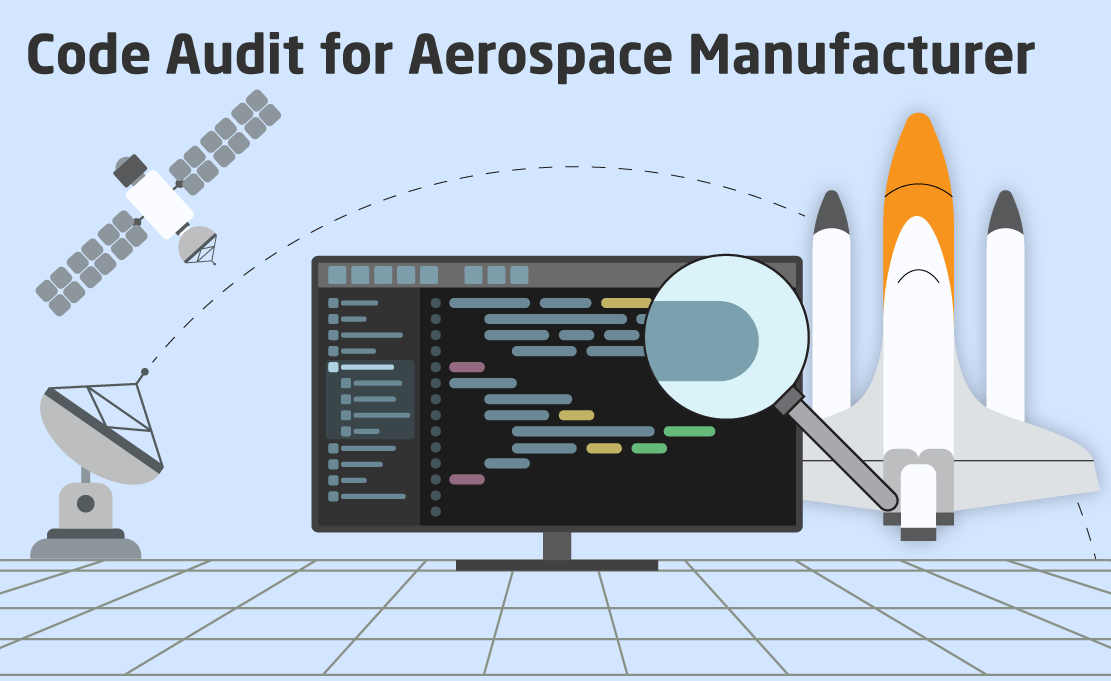
Aerospace Manufacturer — Code Audit

Challenge

An aerospace component manufacturer needed an independent review of a desktop application used for modelling aircraft and spacecraft behavior during planning, design, and construction.

What Chudovo Assessed

Code quality and architecture, performance, security, testing, and compliance for the .NET/WPF desktop application.

Decision/Output

Identified security gaps and problem areas, with fixes that improved the client’s budgeting and ongoing software maintenance costs.

The Technology Landscape We Work With

The audit can cover the broad manufacturing technology landscape, scoped per project:
ERP System

ERP platforms such as SAP, Microsoft Dynamics, Epicor, or Infor

Maintennce of the .NET cloud applications

Cloud infrastructure across AWS and Azure

B2B Marketplaces

On-premises and hybrid data centers

Marketplace Operators

Identity and access platforms

Call Routing & Dial Plans

Network and backup systems

Data Governance

OT-adjacent interfaces, where explicitly in scope

Customer Feedback

Anton Schneerson
Vice President
Flacks Group
Chudovo professionally completed the projects and rendered high-quality deliverables, strictly adhering to the deadline. The team responsibly streamlined the workflow and communication, addressing issues and creating solutions operatively.

Reference Frameworks for Manufacturing IT and OT Risk

Findings can be structured against recognised security and risk-management frameworks, agreed during scoping:

NIST CSF 2.0 — general cybersecurity risk-management framework

ISO/IEC 27001:2022 — information security management systems

NIST SP 800-82 Rev. 3 — OT-specific, where the engagement includes OT-related dependencies

IEC 62443 — industrial automation and control systems, where relevant

Why Chudovo

IT audit

IT Audit Experience

Chudovo operates a dedicated IT audit practice covering applications, infrastructure, security, risk, and audit reporting.

Manufacturing industry

Manufacturing Experience

Chudovo has audited enterprise IT operations, an ERP migration, and engineering software for manufacturing clients across different industries and risk profiles.

Admin Portal

Software Engineering Expertise

This matters when audit scope includes source code, custom applications, integration architecture, or migration constraints, in addition to policy and control assessment. 

FAQ

What is different about an IT audit for a manufacturing company? Answer
A manufacturing IT audit has to account for production dependencies, ERP and MES systems, legacy factory applications, and vendor access to equipment, on top of standard office IT. A generic IT audit doesn't map these relationships between systems and the production line.
Does a manufacturing IT audit include OT and production systems? Answer
It includes IT and OT dependencies and interfaces, such as how a production system connects to the network and who has access to it. Specialist OT penetration testing is a distinct, more specialized capability and is scoped separately if the engagement requires it.
Can you audit our IT environment without disrupting production? Answer
Yes. Scope and plant constraints are agreed before the audit starts, and the technical review is planned around what can and can't be disrupted during the engagement.
Should we conduct an IT audit before an ERP or MES migration? Answer
Yes, particularly if the migration is already delayed or the completion date isn't fixed. Chudovo's Pleuger engagement audited a stalled Oracle-to-proAlpha migration and produced an action plan for the specific blockers causing the delay.
Can the audit identify legacy systems that should be modernised first? Answer
Yes. Legacy and lifecycle risk is one of the audit's core workstreams, and findings are ranked so they can feed directly into a modernisation roadmap.
What deliverables does a manufacturer receive? Answer
A current-state map, a prioritised risk register, application and infrastructure findings, an IT/OT dependency overview, and a prioritised improvement roadmap. ERP-specific findings are included where the engagement covers a migration or ERP landscape.
Can you audit multiple plants or sites? Answer
Yes, scope and timeline are defined per engagement based on the number of sites and how much their IT environments differ from each other.
Which standards can the audit be mapped against? Answer
NIST CSF and ISO 27001 by default, with NIST SP 800-82 or IEC 62443 where OT-adjacent scope and confirmed expertise support it. Regulatory frameworks such as NIS2, CRA, or CMMC are only relevant depending on your entity type, product, and contracts, and are addressed case by case.
Request an audit