Most logistics teams answer that question by checking five carrier portals and a spreadsheet. Chudovo builds the layer that answers it in one place, built around the systems and partners already in use.
What Each System Actually Answers
|
System |
What It Answers |
| Supply Chain Management (SCM) | How to plan and run the supply chain |
| TMS | How to execute transportation |
| WMS | How to execute warehouse operations |
| ERP | What the commercial and operational record shows |
| Supply Chain Visibility |
What’s happening right now, what’s likely to happen next, and where someone needs to step in |
A visibility layer connects events across those systems, carriers, and partners, so a team can answer three questions from one place:





In Chudovo, we know the true meaning of statuses like “in transit” or “delayed,” so everyone stops reconciling the meaning of the same event five different times.
No more manual tracking of statuses and firefighting; a proactive system shows what needs your attention even before a customer calls for help.
A new carrier, system, or partner is easily integrated as another source without changing the architecture of the whole system each time.
The event model, integration, and prediction logic are delivered as a client’s private system, not a subscription to the vendor’s system.

Multimodal Tracking of Shipments
Status of ocean, air, road, and rail shipments, normalized across all modes of transport, irrespective of the carrier providing the information.

Predictive Estimation of Arrival Time
Estimation of arrival time based on the actual carrier, lane, and event data for the given network, not just some general formula.

Exception Handling
Delays, non-compliance with milestones, and data missing is flagged as exceptions and are escalated to the relevant person or system.

Views Based on Roles
Dashboards for internal operations and customer/3PL portals, both derived from the same underlying event data but with different permissions.

Monitoring of Conditions and Cargo
If there are any IoT or telematics sensors deployed, then they can add conditions like temperature, humidity, shock, and location to the shipment timeline.

Data Quality and Freshness
Every event contains the source of the event, its timestamp, and the confidence score, allowing distinction between fresh and stale status updates.

Logistics and Operations Managers
One queue of items that really need to be addressed today rather than manual checks in with each carrier.
Carriers and 3PLs
One interface point instead of a separate inquiry to each shipper or customer.
Retailers and Shippers
Inbound ETA and exceptions information that can go directly into the planning process.

Customers and Partners
An online, self-service portal for tracking rather than status inquiries via telephone or email.
The same components already familiar from Chudovo’s broader engineering work — REST, GraphQL, gRPC, EDI X12/EDIFACT, webhooks, MQTT, Kafka, Flink, and cloud infrastructure — form a specific visibility pipeline, not just a technology list.
| Layer | What It Does |
| Sources | TMS/ERP/WMS, carrier and 3PL systems, GPS/ELD/telematics, AIS/port/terminal feeds, IoT condition sensors, API/EDI/webhooks |
| Identity Matching and Event Normalisation | Shipment, order, and container IDs are matched across systems into one canonical event model |
| Streaming and Event Layer | Events are ingested and processed in near real time as they arrive from each source |
| Data Quality and Milestone Engine | Each event is checked for freshness and completeness before it updates a shipment’s status |
| ETA, Risk, and Anomaly Models | Models trained per lane and carrier combination on the network’s own historical event data, retrained as new lanes and carriers are added. |
| Exception and Workflow Engine | Rule and threshold logic determines when a deviation becomes an exception, and which team or system it’s routed to. |
| Delivery Layer | The same event store powers APIs, BI exports, and portal front-ends, so every output reads from one source of truth. |
Five engineering disciplines sit behind this pipeline: integration adapters for each source type, a canonical event model, event streaming infrastructure, prediction and anomaly services, and observability and data-quality controls.
Encryption in transit and at rest
Access control based on role and privilege levels

SSO using SAML/OIDC if required, and MFA

Isolation of data belonging to the customer and tenant

Logging and secrets management

Data retention and destruction based on GDPR/DPA guidelines

Vulnerability management and backup/recovery monitoring
Client Profile
Shipper or 3PL managing their shipments using multiple carrier portals and spreadsheets.
Challenge
Fragments of carrier data with no consolidated source of truth for shipment status.
Deliverables by Chudovo
Event consolidation that integrates carrier and partner events into a singular shipment timeline.
Metrics for Tracking
Coverage %, completeness % of event data, event latency, number of integrations enabled, carrier onboarding TTM.
Client Profile
A logistics provider that manages exceptions reactively after problems have already occurred.
Challenge
No advance notice if there’s an issue with the shipment to prevent a missed ETA.
Chudovo Offerings
ETA and exception management models based on the client’s unique carrier and lane information.
Key Metrics
ETA accuracy for each mode/lane, exception lead-time, on-time in full, dwell/detention time, alert acknowledgements, and manual interventions avoided.
Client Profile
A 3PL or carrier receiving numerous status check requests from customers.
Problem
No way for customers to check their shipment status through self-service.
Solution Offered by Chudovo
Role-based branded portal on the same visibility platform.
Metrics for Evaluation
Portal utilization, status check inquiries, response time, SLA violation ratio, number of logins by customers.
Client Profile
A temperature-sensitive or high-value cargo shipper dependent on locational information.
Problem
Unable to verify that cargo remains under safe conditions throughout the transport.
Chudovo Value Proposition
IoT condition awareness added to the transport schedule.
Metrics
Sensor coverage, excursions, time-to-alert, cost savings, completeness of chain of custody.
Client
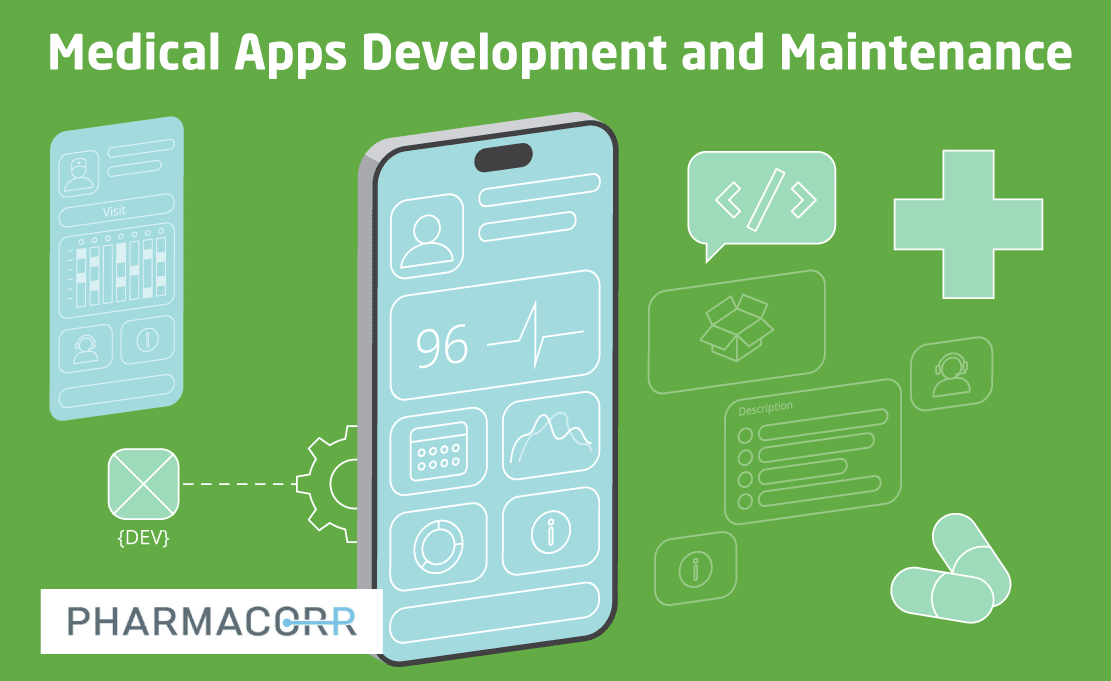
PharmaCorr, a US healthcare logistics provider serving correctional pharmacies.
Challenge
Manual parcel tracking across an external carrier created delays and fragmented delivery status information.
Visibility Scope
A back-end application integrating the client’s EHR system with the UPS API: creating shipment records, retrieving tracking numbers, polling status and location, storing shipment history, notifying facilities of incoming deliveries, and updating on-site inventory automatically once a parcel is marked delivered.
Architecture Relevance
External carrier → API → central application → operational workflow, the same pattern this page’s architecture section describes.
Outcome
Centralised delivery information, fewer manual status checks, and better coordination between pharmacies and facilities.
Client
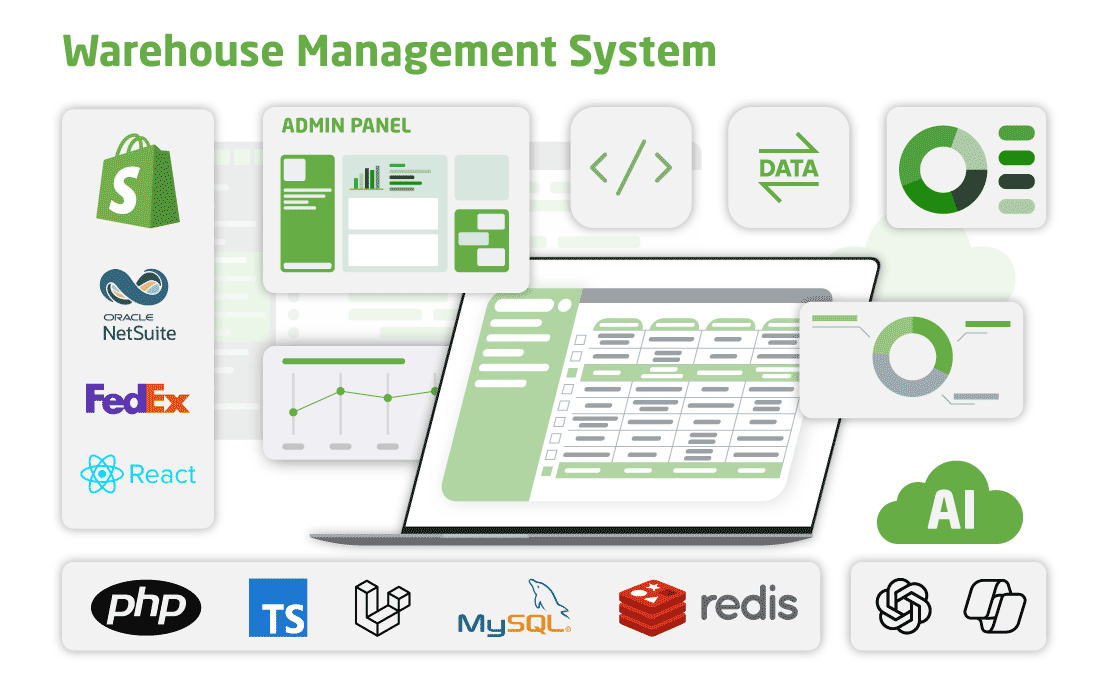
An American retail company that has been carrying out warehouse and fulfillment processes.
Problem
There was no common operational workflow between warehouses, orders, and shipments in the NetSuite, Shopify, and FedEx platforms.
Integration Coverage
NetSuite ERP integration, FedEx logistics integration, and Shopify integration, with the shipment tracking function available in the storefront app and the deliveries and receptions process unified.
Outcome
Chudovo created an operational workflow for the integration of warehouses, ERP, commerce, and carrier systems.
Number of systems and carriers to integrate
Transport modes covered

Shipment and event volume

Integration type (API, EDI, webhook, telematics)

Current data-quality state

ETA/ML model complexity

Multi-tenancy and portal requirements

SLA and availability requirements

Security and compliance requirements
Integration Depth Across the Logistics Stack
The engineering done at Chudovo is already covering all systems that need to be connected by a visibility platform, like SAP, NetSuite, Dynamics 365 ERPs, Carrier Data via EDI/API integration, and IoT protocols such as MQTT, AWS/Azure IoT.
Architecture Designed Around Your Network
The event model, integration adapters, and prediction layer are architected around the carriers and systems you are using already.
Engineering Behind the Visibility Data
Event normalization, event streaming, ETA modeling, and data quality controls are engineering domains Chudovo creates natively and not just a repackaged reporting layer.
Supply Chain Management Expertise
Visibility engineering at Chudovo leverages a wider SCM practice for planning, procurement, inventory, and supplier management processes.