





VR Training Simulator Development

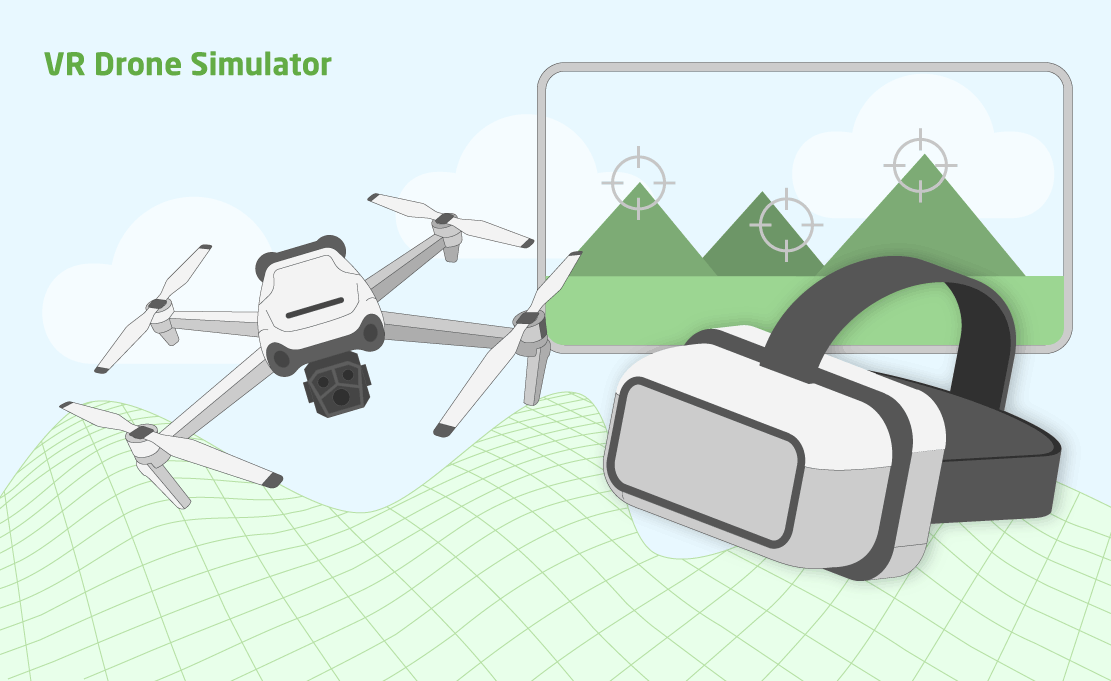
Chudovo builds custom VR training solutions that let organizations train employees on procedures, equipment, and scenarios in a virtual environment. The simulators replicate real working conditions, with built-in performance tracking and learning analytics, so training departments get measurable outcomes from each session.
Get a free project estimation

VR Training Software Services

Chudovo covers the lifecycle of VR training software, from new simulator development through modernization of existing applications and consulting on VR training strategy.
  • Chudovo develops VR simulators end-to-end, from training needs analysis through 3D asset production, VR application engineering, LMS integration, and deployment. Each simulator is designed around the competencies the client's training program needs to build.
  • Chudovo updates existing VR training applications and learning platforms so they run on current headset platforms, support the latest engine versions, and meet new training requirements. Modernization typically covers migration to newer Unity or Unreal versions, headset compatibility updates, the addition of new scenarios, and integration with current LMS platforms.
  • Chudovo advises organizations that are evaluating VR for training, scoping a pilot project, or planning a wider enterprise VR learning program. Consulting covers headset selection, simulator architecture, training scenario prioritization, vendor evaluation, and integration with existing learning systems.

Our Awards and Recognition

Top Education App Developers in Germany by Manifest
Top Education Custom Software Development Company 2026 by SuperbCompanies
Top Full Service Development Company 2025 by Feedbax
Top App Development Company 2025 by Feedbax
Top Software Development Company
Top Software Developers in USA 2026 by Techreviewer
Sortlist Trusted Partner
Top Software Development Company 2026 by RightFirms

Our Development Approaches to the Development of VR Training Simulators

Learning-Outcome-First Design

Chudovo designs each simulator around the specific competencies trainees need to acquire, with the scenarios and assessments built to test those competencies.

AI-Assisted Development

Chudovo applies an AI-assisted development approach to VR simulator projects, with the tools supporting work on shader code, animation logic, and platform-specific implementations.

Performance-First Engineering

VR simulators are engineered for stable frame rates and motion comfort on the target headset, so trainees can use the simulator for full sessions without discomfort.

LMS-Aware Architecture

Simulators are built to exchange training data with the corporate LMS the client already runs, so VR sessions appear in the same reporting structure as the rest of the training program.

Expert’s Quote

Andrew Vakulich
VR training simulators work because employees learn faster when they practice instead of just watching. For organizations that train teams on equipment, procedures, or safety scenarios, the simulator pays back the development cost within the first training cycles. Our role is making sure the simulator measures the right competencies and integrates with the LMS that the client already runs.
Andrew Vakulich
Delivery Manager

Why Chudovo for VR Training Simulator Development

Domain-Aware Engineering

Chudovo makes engineering teams that work in the VR industry, and in each project, the teams are industry-domain-aware, from healthcare protocols to industrial safety standards.

End-to-End VR Capability

We offer 3D asset production, VR app development, backend services, admin dashboards, and LMS integration under one roof, thereby saving the cost of working with separate vendors.

Enterprise-Ready Delivery

Chudovo delivers enterprise VR training projects with the documentation, security, and compliance practices big organizations need. The team supports procurement reviews, security audits, and pilots that lead to wider rollouts.

Backed by Wider Education Software Expertise

VR training simulators are one of the specializations within Chudovo's broader education software practice, which covers LMS extensions, corporate learning platforms, and other EdTech solutions.

Long-Term Support

VR platforms evolve, headsets change, and the team takes care of platform updates and content refreshes along with the original development.

Typical Features We Develop

Every element in a VR training simulator has a place, and that position is earned by the operational value it provides. Here are the features Chudovo typically incorporates into its VR training initiatives and the business benefits they provide.

Feature Business Value
Safety simulations Train without operational risks
Equipment operation Practice before working with real machinery
Emergency response Prepare teams for critical situations
Skill assessment Measure competency development
Learning analytics Track training effectiveness
LMS synchronization Keep all training records in one place
Multi-user sessions Train distributed teams together
Scenario customization Reflect your real workflows

Tech Stack for VR Training Simulator Development

Game Engines
VR Headsets and Platforms
VR Development SDKs
Programming Languages
Admin Portals and Reporting
Multiplayer and Real-Time Communication
3D Asset Creation
AI and Computer Vision in Simulators
Game Engines
  • Unity (primary engine for most VR training projects)
  • Unreal Engine (for projects that need high-end visuals or specific Unreal capabilities)
  • Godot
VR Headsets and Platforms
  • Meta Quest 2 and Quest 3
  • Meta Quest Pro
  • HTC Vive and Vive Pro
  • Pico 4 and Pico 4 Enterprise
  • Apple Vision Pro
  • Varjo (for enterprise high-fidelity VR)
  • Microsoft HoloLens 2
  • PlayStation VR2
VR Development SDKs
  • Meta Quest SDK
  • OpenXR
  • SteamVR SDK
  • Apple visionOS SDK
  • Pico Developer SDK
  • Unity XR Interaction Toolkit
  • Unreal VR Template
Programming Languages
  • C# (Unity)
  • C++ (Unreal Engine)
  • Python (backend, AI integration)
Admin Portals and Reporting
Multiplayer and Real-Time Communication
  • Photon Fusion
  • Mirror Networking
  • Normcore
  • Agora
  • WebRTC
3D Asset Creation
  • Blender
  • Autodesk Maya
  • 3ds Max
  • Substance Painter
AI and Computer Vision in Simulators
  • TensorFlow Lite
  • PyTorch
  • OpenCV
  • NVIDIA Omniverse for high-fidelity simulation

What's Included in a Custom VR Training Simulator

Training Scenarios

Training Scenarios

Interactive simulations based on your business procedures

Assessment System

Assessment System

Knowledge checks, scoring, and competency validation

Performance Analytics

Performance Analytics

Track trainee actions, completion rates, and results

Instructor Dashboard

Instructor Dashboard

Monitor sessions and review trainee progress

LMS Integration

LMS Integration

Synchronize training records with your learning platform

Multiplayer Mode

Multiplayer Mode

Collaborative training for teams and instructors

Voice Guidance

Voice Guidance

In-simulator instructions and feedback

Equipment Integration

Equipment Integration

Support for controllers, haptic devices, or custom hardware

Admin Portal

Admin Portal

Manage users, scenarios, and training content

Ongoing Updates

Ongoing Updates

New scenarios, headset compatibility, and feature enhancements

What Our Customers Say

Under NDA
Chief Executive Officer
Reliable tech partner for our e-learning platform development. Chudovo acted as a true partner rather than just a vendor. They provided valuable feedback during the design phase and were flexible when new features were introduced mid-development. Their QA process ensure the platform was reliable and their post lunch support helped us handle scaling as user numbers grew. It is rare to find a team so dedicated to long term success and continuous improvement.

Business Benefits

Custom VR training simulators bring real business benefits to companies that need to train distributed teams at scale and safely, consistently.
benefits
Fast Onboarding and Skill Acquisition
VR simulators let trainees acquire skills and start training whenever they need, and sometimes from a preferred location. Such training allows them to repeat processes as many times as they need to meet the required standards.
benefits
Safe Practice for Dangerous Situations
VR provides a capability for personnel to practice emergency responses, equipment operation, and high-risk procedures without the risk of physical injury or damage to expensive equipment.
benefits
Lower Training Costs for Distributed Teams
A single VR simulator can be used by employees at different locations, without losing the quality of training. It eliminates travel, instructors' involvement, and physical training equipment costs.
benefits
Measurable Training Results
Embedded analytics follow the activities, reaction times, and choices of the trainees every iteration. This information provides HR and training departments with the progress and final level of competencies and skills.
benefits
Consistent Training Quality
Every learner goes through the same situations under the same conditions, excluding discrepancies, and increasing the quality of training.

Case Studies

FAQ

How long does it take to develop a VR training simulator? Answer
The terms of development depend on the number of scenarios, the level of visual fidelity, and the required integrations. A typical VR training simulator project takes from three to nine months. Pilot or MVP versions can be delivered in shorter timelines.
Which VR headsets does Chudovo build for? Answer
Chudovo develops for the headsets on which the client’s training program already runs, including Meta Quest, HTC Vive, Pico, and Apple Vision Pro. We also provide advice on headset selection for clients who have not yet committed to a platform.
Can VR training data be integrated with our existing LMS? Answer
Yes. Chudovo builds VR simulators using SCORM, xAPI, and direct API integration with the client's LMS. Such an approach allows the training data to appear in the same dashboards as the rest of the training program.
Do you build multiplayer VR training simulators? Answer
Yes. We build multiplayer VR simulators to let several trainees train simultaneously and in different roles in coordinated scenarios, such as emergency response, surgical teams, or industrial crew operations. We use Photon, Mirror, and Normcore to build the multiplayer versions.
How much do VR training simulators cost? Answer
The cost of VR training simulator development depends on the complexity of scenarios, the level of visual detail, headset versions supported, integration needs, and other parameters. Most enterprise VR training projects start in the range of $20,000 to $50,000+ for a focused training application.
What is enterprise VR training, and how is it different from consumer VR? Answer
Enterprise VR training is VR software built for organizations that need to train employees against specific business outcomes, with documentation, security, and integration requirements that consumer VR applications do not have. Chudovo builds for the procurement, audit, and rollout cycles that enterprise VR training programs go through.
Do you support integration with real equipment or sensors? Answer
Yes. Chudovo develops VR simulators with the possibility of integration with real equipment and sensors such as haptic gloves, motion platforms, real instrument panels, etc. This is a standard for training in aviation, medical, heavy equipment, etc.
Do you provide content updates after launch? Answer
Yes. Chudovo offers ongoing support of VR simulators and includes development of new scenarios, updates of headset compatibility, changes according to the client’s training program development, etc.
What if my team has no VR training experience? Answer
Chudovo runs pilot projects to help organizations validate VR training on a specific use case before launching a full program. The pilot also provides the basis for the business case to scale VR training across the organization.
Contact our team and get an assesment of your VR training software!