



Financial Legacy System Modernization

Chudovo engineers upgrade and move legacy financial systems, such as core banking systems, insurance systems, and investments/trading systems, to modern architecture and cloud computing environments while ensuring transactions are always complete and comply with regulations.
Request modernization of legacy financial apps

Our Financial Legacy System Modernization Services

Our Awards and Recognitions

Top Financial & Payments Web Development Company 2026 by SuperbCompanies
Top Enterprise Applications Development Company 2026 by Feedbax
Top Software Developers in USA 2026 by Techreviewer
Sortlist Trusted Partner
Top Implementation Service Company by Goodfirms

How Much Does Financial Legacy System Modernization Cost?

Costs depend on system complexity, transaction volume, regulatory scope, and the number of integrations requiring rebuilding.
Software complexity
Simple
Examples

Module-only refactoring or upgrade of a financial app, limited integrations, code documentation

Price range
from $5000
to $6000
Development time
1-2 months
Examples

Payment gateway module refactoring to a modern framework

Price range
from $5000
to $6000
Development time
1-2 months
Examples

Insurance policy management module migration the cloud

Price range
from $5000
to $5000
Development time
1-2 months
Team

Project manager, developer, QA engineer

Software complexity
☆☆
Medium
Examples

Full legacy financial application engineering, up to 5 integrations, compliance

Price range
from $25000
to $45000
Development time
2-4 months
Examples

Lending core platform refactored to modern framework with Azure stack and CI/CD pipeline

Price range
from $2000
to $25000
Development time
2-4 months
Examples

Back-end insurance claims management platform refactoring and rebuilding with database migration and integration layer reconstruction

Price range
from $32000
to $48000
Development time
4-5 months
Examples

Legacy trading platform migrated to cloud stack and PCI-DSS compliance verification

Price range
from $15000
to $20000
Development time
2-4 months
Team

Project manager, solution architect, developers, DBA, QA engineer

Software complexity
☆☆☆
Enterprise
Examples

Main core banking or insurance platform refactoring, 5+ integrations, full compliance

Price range
from $49000
to $65000
Development time
5+ months
Examples

Decompose the core banking legacy monolithic application into microservices and integrate with SWIFT and open banking API

Price range
from $80000
to $99000
Development time
6+ months
Examples

Investment platform core migrated from on-premise infrastructure to cloud with SOC 2 audit trail

Price range
from $30000
to $35000
Development time
4+ months
Team

Project manager, business analyst, solution architect, developers, DBA, integration engineer, QA engineer

Why Choose Chudovo for Financial Legacy System Modernization

  • We have vast experience in the development of financial software, upgrading of legacy systems, and maintenance of financial systems in the lending, core banking, and insurance space
  • Expertise in AI-driven legacy migrations
  • We develop an architecture for GDPR, PCI DSS, and SOC 2 compliance before coding migrations
  • We start a project within one week of the initial inquiry
  • We compose customized project teams based on our engineers, architects, and other specialists, based on the needs of the particular engagement
  • Flexible engagement models: dedicated team, outsourcing project, or staff augmentation
  • Our DBAs offer round-the-clock service in a production environment for financial databases
  • We deploy both systems, reconcile transactions, and only then proceed to retire the legacy system


Who We Work With

Chudovo provides financial legacy modernization solutions to businesses that perform financial services. Our specialists understand the demands of each type of financial business in terms of regulatory compliance, transaction accuracy, and availability of systems.
  • Retail and commercial banks
  • Providers of core banking platforms
  • Insurance companies and insurtechs
  • Asset managers and investment managers
  • Lending and loan origination organizations
  • Payment service providers and payment processors
  • Trading platforms and brokers
  • Wealth management and financial advisory organizations
  • Credit unions and other co-operatives
  • RegTechs providing regulatory compliance software
  • FinTechs using legacy IT architectures
  • FinTech startups with limited technical scalability

Case Studies

Modernization of the Legacy Loan Management System

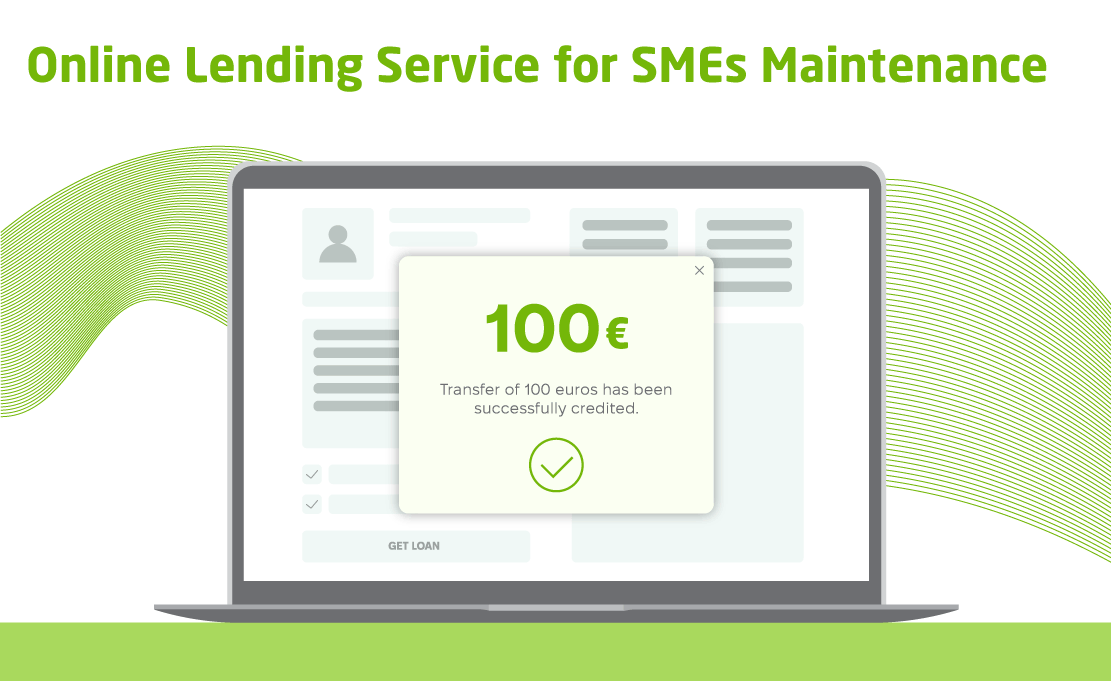
The Chudovo team undertook modernization initiatives for a legacy, monolithic loan management system originally created for a company specializing in loans for SMEs. The team’s responsibilities included migration of the codebase to the most recent framework version, establishment of a cloud environment, and implementation of a CI/CD delivery pipeline. The team is currently working on breaking down the platform’s monolithic architecture. The goal is to improve system scalability by moving to microservices.
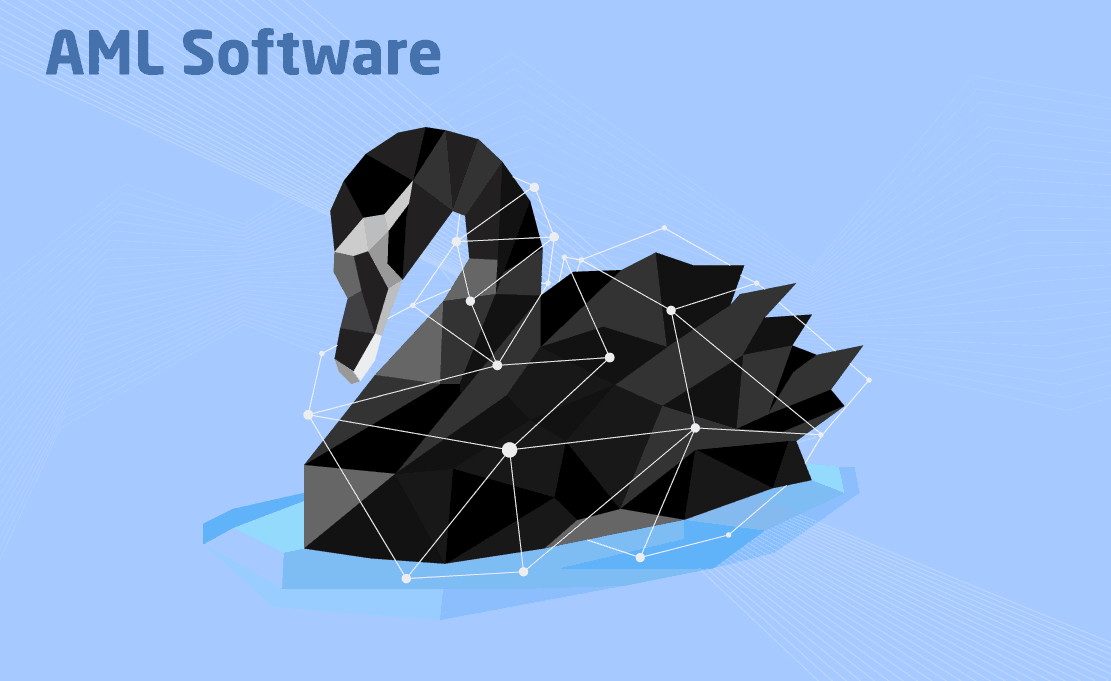
Development and Support of the AML Transaction Intelligence Module

The Chudovo team integrated with an existing engineering group, contributing to the development of software for a large-scale banking application ecosystem. The members of our team were responsible for developing a transaction intelligence module from scratch, upgrading the front-end of the legacy platform, and supporting the whole product suite.

What Our Experts Say

Dmytro Chudov CEO & CTO
Every migration process that we perform starts with two inputs – the integration map and the data quality report. The two pieces of input will enable our customer and us to understand the real requirements of the engagement, even before the customer makes a commitment. It is always the integrations that fail during cutover, rather than the data from the underlying applications. Any data quality problems that come up midway through the project will cause more delays and expenses than the assessment process itself.
Dmytro Chudov
CEO/CTO

Technologies

Databases & Storage
AI-Assisted Tools
Integrations
Security & Compliance
Databases & Storage
  • Oracle DB
  • Microsoft SQL Server
  • PostgreSQL
  • MySQL
  • MongoDB
  • Redis
  • Cassandra
  • Amazon RDS
  • Amazon Aurora
  • Azure SQL
AI-Assisted Tools

AI-Assisted Code Transformation:

  • Claude Code
  • IBM Watsonx Code Assistant for Z
  • Amazon Q Developer
  • GitHub Copilot Enterprise
  • OpenRewrite
  • Moderne

Intelligent Data Migration and ETL:

  • Informatica IDMC
  • Ispirer Toolkit
  • Qlik Talend Data Fabric

Document Intelligence:

  • Azure Document Intelligence
  • ABBYY Vantage
  • Amazon Textract
  • Google Cloud Document AI

Process and Workflow Automation:

  • UiPath Platform
  • SS&C Blue Prism WorkHQ
  • Microsoft Power Automate with AI Builder

MLOps and Model Governance:

  • Dataiku
  • Azure Machine Learning
  • H2O AI Cloud
  • Databricks Mosaic AI

Fraud and AML Detection:

  • Feedzai RiskOps
  • SAS Fraud Decisioning
  • FICO Platform
  • DataVisor FRAML

Synthetic Data:

  • MOSTLY AI
  • Syntho
  • Tonic Structural

AI-Augmented QA:

  • Tricentis Tosca
  • Applitools
  • Mabl
  • Functionize
Integrations
  • BizTalk Server (legacy)
  • Azure Integration Services
  • REST APIs
  • SOAP/WSDL
  • Azure Service Bus
  • Apache Kafka
  • Docker
  • GitHub Actions
  • GitLab CI/CD
  • Azure DevOps
  • Jenkins
  • Terraform
  • Kubernetes
  • Helm
Security & Compliance
  • PCI DSS-compliant infrastructure configuration
  • GDPR data residency and consent management
  • SOC 2 audit trail implementation
  • AES-256 encryption at rest, TLS in transit
  • AWS IAM
  • Azure Active Directory
  • HashiCorp Vault
  • AWS Secrets Manager
  • xUnit
  • NUnit
  • Selenium
  • Cypress
  • Playwright
  • k6 (performance)
  • SonarQube

Why Modernize Legacy Financial Systems

Pressure from regulatory deadlines
Regulations in the EU, UK, and US require increasingly stringent criteria for data residency, audit trails, and resilient architecture. Architectures built in the legacy days that do not have such criteria incorporated cannot fulfill them without undergoing a transformation in architecture - remediation costs are significantly higher when done after an architecture has aged.
Restrictions imposed by transaction processing capabilities
Batch-processing systems will never be able to process transactions in real time because customers expect immediate feedback about their transactions. Immediate settlement, update of balances, and positioning all depend on a real-time transaction processing capability — impossible to fulfill through a batch process.
PCI DSS compliance and the scope of the cardholder data environment
Legacy payment processing applications have multiple flows for cardholder data in different levels of the architecture, making the scope of PCI DSS assessments very large and expensive. Modernizing the legacy application will help minimize this problem by isolating payment data flows.
Integration with the existing financial system
According to the open banking rules (PSD2, CDR), financial organizations must disclose their customers' data using standardized application programming interfaces (APIs). Financial infrastructures based on proprietary protocols require bespoke middleware to be developed for each additional integration: it can be either regulatory, partnership, or internal. Every additional integration means additional expenses and possible source of errors.
Cost of Infrastructure and Licensing
A financial organization that has an on-premise financial infrastructure pays a fixed price for it no matter how much it utilizes its resources: hardware of servers, operating system licenses, database licenses, etc. In cloud deployment, pricing becomes utility-based. Also, there is no need to plan the capacity based on the maximum load forecasted in the distant future.
Availability of skilled engineers
Skilled engineers who know how the code of financial systems developed on legacy technology works are harder to find every year. The older system stays, the fewer people have the required expertise, and the higher the risks become when such knowledge cannot be transferred before replacement.

Customer's Reviews

Olha Chura
Partnership Lead
Kitrum
The main goals were to ensure stable operation of the existing lending platform, provide continuous maintenance and support, and later modernize the system by separating legacy components, migrating to .NET 9, and transitioning to a microservices-based architecture to improve scalability and performance. We chose Chudovo because of their proven expertise in ASP.NET development and experience in fintech projects. The lending platform remained stable and fully operational during the entire collaboration. We successfully implemented the modernization roadmap, restructured the system into microservices, and completed the migration to .NET, resulting in improved scalability, faster deployment, and easier maintenance.

FAQ

How the progress will be tracked? Answer
Status reports are generated every week and contain information about what was done, what needs to be done, and future milestones. Architecture decisions and migration plans are recorded in each phase of the project. For the dedicated team engagement model, sprint reviews are conducted each two weeks after gaining access to engineers and the project manager.
How fast can a project start? Answer
The project starts within a week after the request.
What engagement model do you offer? Answer
We have three engagement models that you may opt to use depending on your organization’s unique situation: the dedicated team, project outsourcing, and staff augmentation models.
What is done to ensure that financial systems continue working during migration? Answer
Phased migration with parallel runs ensures that the legacy application remains operational during validation testing of the migrated application. Cutover is made when reconciliations prove that both applications produce identical results. This method does not require extensive maintenance windows.
What about the regulatory compliance aspect? Answer
The compliance architecture is designed in advance, i.e., before the migration code is created. Our approach does not assume treating regulatory compliance as a sign-off process. For each migration phase, we have defined acceptance criteria concerning compliance which should be met before moving to the next phase.
Is it possible to migrate financial systems without shutting them down? Answer
Yes, it is, although only for most of the cases. We employ phased cutover with traffic shifting rather than the traditional one-time migration using a maintenance window. The suitability of our approach is verified at the assessment stage.
What is the duration of the financial legacy modernization project? Answer
Financial legacy modernization with a specific focus on modules will require between two and four months. Financial legacy modernization with applications will require between four and nine months, depending on the scope of integration involved. Enterprise-level platform modernization will take nine to eighteen months or more.
Request the assesment of your legacy financial system for further modernization!