
Healthcare Legacy System Migration

The engineers at Chudovo specialize in migrating legacy healthcare solutions such as EHRs, clinical systems, medication management systems, and custom healthcare applications, in compliance with HIPAA.
Request modernization of legacy healthcare systems

Our Healthcare Legacy System Migration Services

Our Awards

Top Healthcare Software Developers 2026 by Techreviewer
Top Health and Wellness App Developers in Germany by (Manifest)
Top Software Development Company 2026 by Feedbax
Top Software Development Company
Sortlist Trusted Partner

These Healthcare Companies Trust Us

PharmaCorr
YesCare

Legacy Healthcare Systems We Work With

By Type of Healthcare System By Type of Healthcare System
By Type of Healthcare System
By Architecture and Deployment Type By Architecture and Deployment Type
By Architecture/Deployment Type
  • Legacy monolithic healthcare systems
  • On-premises Windows Server deployments
  • Desktop applications that need modernizing
  • Solutions with BizTalk Server integrations or file integrations
  • Healthcare solutions using HL7 version 2 integration need to be modernized to use FHIR
  • Multi-tenant SaaS healthcare systems with legacy architectures
  • Multi-tenant databases that need separation for each tenant/facility
  • Applications with no automated testing in place need stability prior to modernization

How Much Does Healthcare Legacy System Migration Cost?

Migration costs depend on system complexity, data volume, number of integrations, compliance requirements, and the migration approach selected.
Software complexity
Simple
Examples

Single module refactoring or version upgrade, a small system with limited integrations

Price range
from $10000
to $20000
Development time
1-2 months
Team

Project manager, developer, QA engineer

Software complexity
☆☆
Medium
Examples

Full legacy EHR reengineering, limited customization, up to 5 integrations

Price range
from $50000
to $99000
Development time
5-8 months
Team

Project manager, solution architect, developers, DBA, QA engineer

Software complexity
☆☆☆
Enterprise
Examples

Large multi-facility healthcare platform migration, HIPAA compliance validation, 5+ integrations

Price range
from $100000
to $300000
Development time
6 months+
Team

Project manager, business analyst, solution architect, developers, DBA, integration engineer, QA engineer

Engagement Models

Dedicated Development Team Dedicated Development Team

This engagement model means building a dedicated team of developers, DBAs, testers, a project manager, or other IT experts committed to your legacy healthcare project. They integrate into the development process and operate under your stakeholders’ supervision. 

  • Team structure tailored to project requirements
  • Exclusively available team members
  • Software developers/architects available
  • Weekly status updates and sprint demos
IT Project Outsourcing IT Project Outsourcing

Full delegation of the healthcare migration project to Chudovo. We handle planning, execution, testing, and delivery against agreed milestones. This model suits organizations that want a defined output delivered within a fixed timeline and budget without managing the engineering team day-to-day.

  • Fixed scope and milestone-based delivery
  • Project manager and solution architect included
  • Regular status updates and sign-off at each phase
  • Handover documentation and knowledge transfer at project close
IT Staff Augmentation IT Staff Augmentation

This model foresees hiring the software engineers or other IT experts to work as members of your current team for a defined period in order to cover some particular skills gaps. The solution is recommended to companies having their own team requiring certain expertise in healthcare migrations, etc.

  • Engagement duration can be flexible
  • Engineers incorporated into your environment
  • Part-time or full-time availability based on your workload
  • Available specialists: developers, DBA, QA/BA, DevOps, software architect

Why Choose Chudovo for Healthcare Legacy System Migration

  • Proven delivery in legacy migration initiatives, including EHR re-engineering, modernizing clinical applications, and 24/7 DBA services for production systems in a healthcare environment
  • Continuous compliance with HIPAA requirements
  • The project starts in ~1 week after the initial request
  • Different engagement types: dedicated teams, outsourcing, and staff augmentation, based on customers’ needs
  • 24/7 DBA services are provided for production systems within healthcare databases
  • Weekly transparent project reports with decisions taken along the way are documented at all stages of each project
  • Project experience across several healthcare sub-sectors: correctional medicine, clinical management, pharmacy, and medical records


Our Clients

Chudovo provides healthcare legacy migration and transformation solutions for any type of healthcare operation – clinical and administrative – and understands the differences in compliance needs, data privacy, and availability constraints unique to each sector of healthcare.
  • Prison and correctional healthcare services
  • Private physicians’ offices and ambulatory clinics
  • Hospitals and inpatient treatment centers
  • Telehealth and remote monitoring organizations
  • Pharmacies and medication management service providers
  • Insurance and managed care organizations
  • Laboratory and diagnostics providers
  • Rehabilitation centers and long-term care organizations
  • Psychiatric providers and mental health organizations
  • Healthcare SaaS providers and healthcare IT providers
  • Public health and governmental healthcare agencies
  • Medical device and biopharma organizations with a software component

Case Studies

Applications Ecosystem in Legacy Healthcare Industry

The team at Chudovo took on modernization and migration of the legacy healthcare apps ecosystem to handle healthcare processes within the correctional facilities that included the prescription, dispensing of medications, management of clinical processes, as well as medical documentation. Works included modernizing applications, refactoring modules, building new applications, CI/CD, and 24×7 DBA support.
Legacy Modernization and Development of Medical Applications for Correctional Healthcare

Chudovo’s engineers performed maintenance and upgrades of legacy medical applications utilized by correctional facilities, such as a patient EHR management application and an application that manages the workflow around medications. Engineers performed migration of legacy code to the current version of frameworks, refactored modules, and configured CI/CD within Azure DevOps. Also, the team transitioned from Windows Active Directory to Microsoft Azure Entra and developed and integrated a medication order management application into the ecosystem.
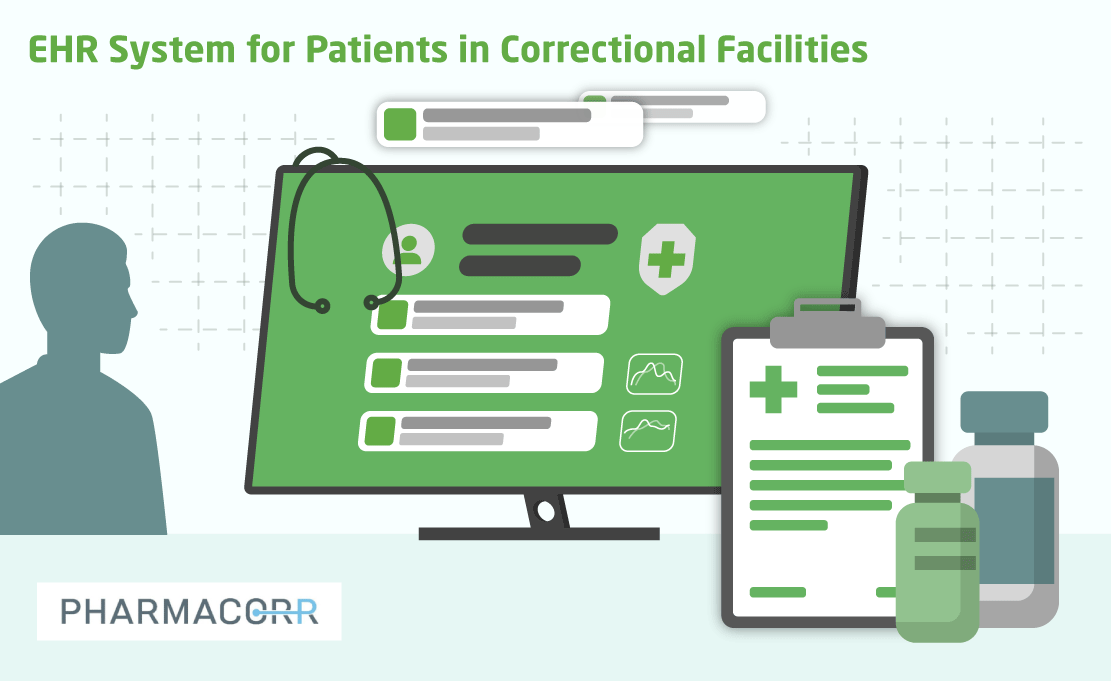
Legacy EHR System Reengineering

We took over maintenance of the legacy EHR system and proceeded with the full reengineering of the product to bring the system architecture up to date and migrate the back-end and front-end infrastructure to the current one. The reengineering fixed the outdated architecture that impeded scalability, per-facility data segmentation, and the inability to access patient records from other facilities, performance issues, and outdated UI. The updated EHR system remains HIPAA-compliant and allows accessing patients’ records centrally from several correctional facilities.
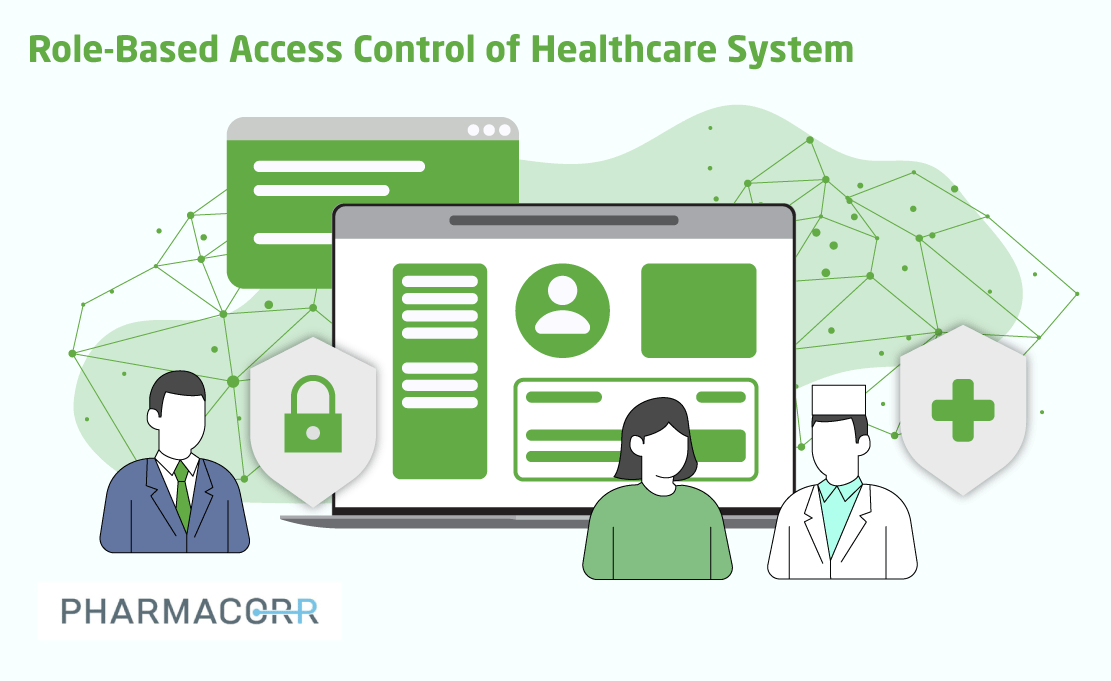
Role-Based Access Control System for a Legacy Healthcare Application Ecosystem

Our team at Chudovo has created an independent RBAC system that handles users’ permissions and access within a number of legacy healthcare applications, as well as the functional modules of each application separately. Before that, users’ access rights were assigned individually for every application separately by administrators without any control or logging. Now we have implemented permissions that depend on users’ roles in the company, governance across applications, and logging of all the actions performed.

What Our Experts Say

Dmytro Chudov CEO & CTO
Legacy migration in healthcare must begin with the data model, not application logic. In almost all legacy systems we have assessed, there is fragmentation in patient data with regard to databases for individual facilities, which do not provide any clear means of cross-facility access. Application logic can easily be refactored. It’s a known engineering task. The real key is how we structure the data model to meet the needs of our clinical scenarios going forward, which determines whether the system will deliver the business value expected post-migration.
Dmytro Chudov
CEO/CTO

Technologies

Databases
Integration & Interoperability
Security & Compliance
Databases
  • Microsoft SQL Server
  • PostgreSQL
  • MySQL
  • MongoDB
  • Redis
Integration & Interoperability
  • HL7 v2
  • HL7 FHIR
  • BizTalk Server (legacy)
  • Azure Integration Services
  • REST APIs
  • SOAP/WSDL
  • Azure Service Bus
  • Apache Kafka
  • Docker
  • Kubernetes
  • Helm
  • GitHub Actions
  • GitLab CI/CD
  • Azure DevOps
  • Jenkins
  • Terraform
Security & Compliance
  • HIPAA-compliant architecture 
  • Azure Active Directory configuration
  • AWS IAM
  • Role-based access control (RBAC)
  • AES-256 encryption at Rest, TLS in transit
  • Technical debt audit 
  • Backup management
  • xUnit
  • NUnit
  • Selenium
  • Cypress
  • Playwright
  • k6 (performance)
  • SonarQube

Why Migrate Legacy Healthcare Systems

Risk of HIPAA compliance violations
Applications developed using outdated technologies or built on an obsolete framework, database, or operating system pose risks in terms of compliance because security holes can be fixed only through updating to a new version, something that is impossible for legacy applications.
Data silos
Since the patient's record may reside in different facilities, continuity in treatment becomes an issue when moving the patient to another facility due to a lack of interoperability in the system.
Integration limitations
Today, most applications used in a healthcare setting use standard protocols such as HL7 FHIR or REST. In order to interface legacy applications that were built before such technology existed, it is necessary to write a separate middleware for each integration process.
Performance with current load
Healthcare systems developed for a small portion of their intended users experience performance degradation as more users join the system. The monolithic design architecture does not allow for selective scaling since the whole application must be scaled based on the most resource-intensive component.
End of vendor/framework support
The older frameworks utilized in clinical systems designed during the decade prior to the current one have ceased receiving vendor security patches. Developing clinical applications on unsupported frameworks can lead to legal risks and technological challenges.
Development speed
The developers working on legacy codebases dedicate an overwhelming majority of their efforts to fixing existing bugs instead of implementing new clinical features. Modernizing the software enables the team to develop at the required speed.

What Our Customers Say

David Wright
Manager of Dev Operations
YesCase (formerly Corizon Health)
Chudovo has taken over the management of all of our software and databases. They’ve also worked on enhancements to our software; they’ve also built a new piece of software for us. Thanks to Chudovo, the company has reduced their time to deliver by half. They’ve also experienced no database emergencies. The team has been greatly reliable, ensuring that every project will be completed. Stakeholders are happy with their services, resulting in a good ongoing relationship.

Featured Projects

FAQ

Are your engineers experienced in HIPAA-compliant systems? Answer
Yes. We have delivered HIPAA-compliant health care software systems in different projects, ranging from EHR systems to prescription management systems and medication dispensing systems. From the project kick-off, we consider HIPAA compliance regulations while designing architecture, configuring infrastructure, and implementing data management processes.
What precautions are taken when migrating PHI? Answer
PHI is encrypted during migration, both in transit and at rest. Only authorized individuals gain access to the PHI. Audit logs are kept for each data transfer phase. We will not migrate the PHI to target systems until those systems meet the HIPAA requirements.
Is it possible for your company to assume control of an existing healthcare system created by another vendor? Answer
Yes, we have assumed control of legacy healthcare code bases, which were undocumented and where we did not previously know the original developer teams. The audit phase allows us to understand the behavior of the code base through its actual usage, including data dependencies – not through documentation alone.
When can your team get started? Answer
Most engagements start within a week after the request is made.
How do you monitor and report on migration progress? Answer
Weekly progress reports are delivered through written documents that detail completed tasks and current development work. Demo sprints are conducted every two weeks if dedicated teams are used. Every architectural and migration decision is documented and reported back to the client during each stage of development. The client can contact our engineers and project manager directly.
What is done when a critical problem arises in production while migrating? Answer
We always have a rollback strategy for each migration phase, and when a critical problem arises after the completion of a phase, the process of rollback starts immediately. In the case of those systems that need to be up and running all the time, we do a parallel run, wherein we run both legacy and migrated systems until the migrated one is proven in production.
Contact our Team to Assess You Legacy Healthcare System for further Modernization